
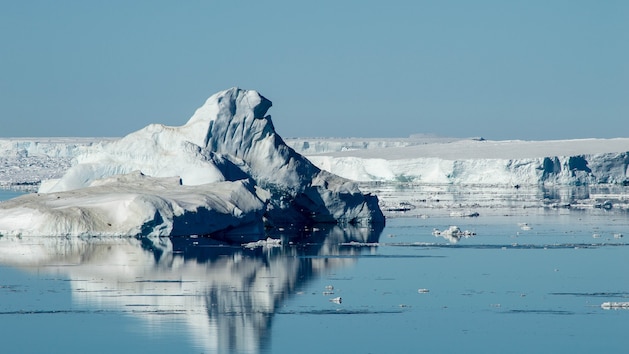
This year’s ozone hole over the Antarctic was the largest in a decade, according to a new report by NOAA and NASA.
The 2026 ozone hole became the seventh largest in 48 years of monitoring, fueled by an unusually powerful polar vortex which prolonged ozone depletion in the Antarctic and allowed the hole to grow larger, researchers explained.
This is a stark contrast to 2025, when the ozone hole ranked as the fifth smallest since 1992.
“The polar vortex was unusually large this year in part because planetary-scale weather systems that typically well up from the lower atmosphere and break up the vortex were especially weak in August and September,” said Amy Butler, a research scientist at NOAA’s Chemical Sciences Laboratory.
According to government data, the ozone hole reached its greatest extent for the year on Sept. 18, measuring 10.5 million square miles, about 90% as large as the largest ozone hole on record in 2000.
Despite this year’s larger hole, however, NOAA and NASA scientists emphasize that efforts to limit ozone-depleting chemical compounds have had a significant impact and long-term recovery remains on track.
“The 2026 ozone hole is large but could have been 1 to 2 million square miles larger if ozone-depleting substances were as prevalent in the atmosphere today as they were at their year 2000 peak,” said Paul Newman, a senior scientist at the University of Maryland and longtime leader of NASA’s ozone research team.
For decades, chlorofluorocarbons (CFCs) and other ozone-depleting compounds were widely used in aerosol sprays, foams, air conditioners, and refrigerators, causing significant reductions in ozone levels. Researchers estimate that the ozone hole will recover by the 2070s as the older compounds disintegrate.
“The annual ozone hole has been forming later in the season in recent years, which tells us the ozone layer is healing,” Newman added.
The so-called “ozone hole” is not an actual hole in the planet’s ozone layer, but rather a large region of the Earth’s stratosphere with extremely low ozone concentrations.
Earth’s ozone layer acts as a planetary sunscreen, shielding humans, animals, and plants from harmful ultraviolet (UV) radiation. When ozone levels drop, more UV rays reach the surface, increasing the risk of adverse health and environmental impacts such as crop damage, skin cancer, and cataracts.
Copyright © 2026, ABC Audio. All rights reserved.

- Ozone hole in 2026 is largest in a decade, but long-term recovery remains on track: Report - November 4, 2026
- Missouri voters reject anti-abortion rights amendment, reaffirming ‘reproductive freedom’ - November 4, 2026
- Cornell alumna named to lead criminal probe into Jane Doe’s rape claim - November 4, 2026