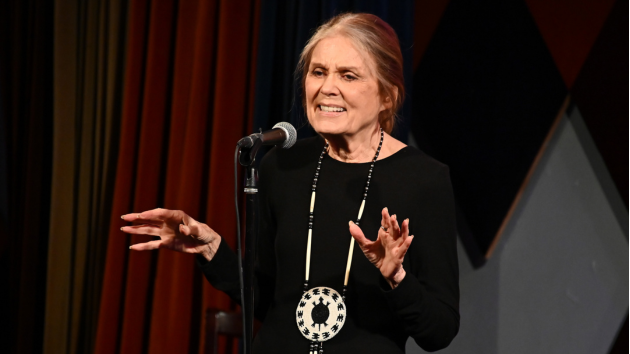

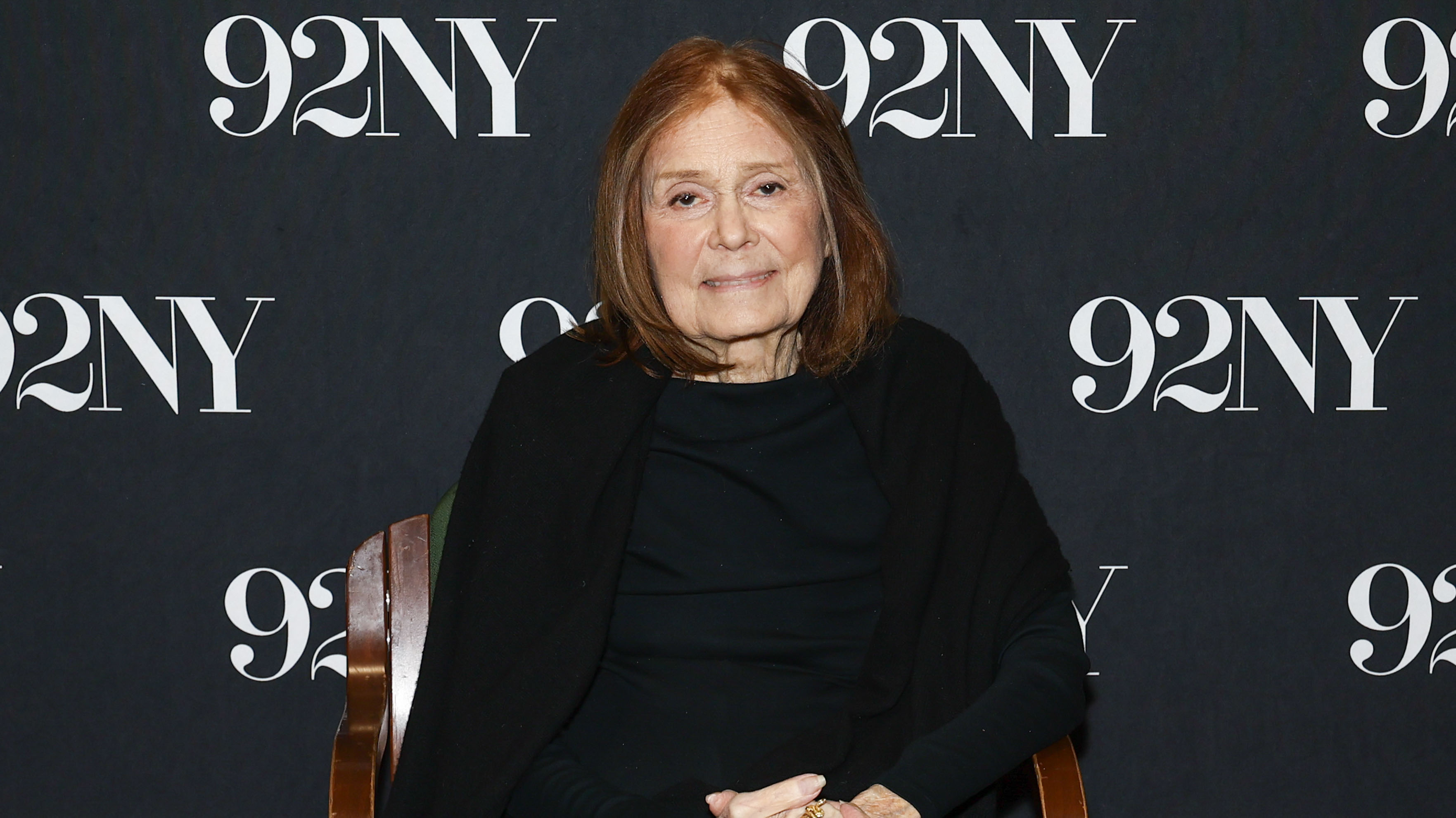
(NEW YORK) — Women’s liberation icon Gloria Steinem has died at 92.
“Yesterday, Gloria Steinem passed away peacefully at her home in New York City, surrounded by some of the many who loved her,” a post on an official social media channel said. “Gloria’s near-century on earth were years well-lived, and she continued working for equality until the very end.”
The outspoken activist and journalist was born on March 25, 1934, in Toledo, Ohio. She studied government at Smith College in Massachusetts, and graduated magna cum laude in 1956.
Afterward, she spent two years studying and researching in India thanks to the Chester Bowles Fellowship, which inspired her grassroots activism later in life.
She would become known as one of the most prominent figures in the modern feminist movement, tackling politics, abortion, marriage and more through her writings and speeches.
“When humans are ranked instead of linked, everyone loses,” she said in her book, “My Life on the Road.”
In an interview with NPR, Steinem spoke about getting pregnant when she was 22 and seeking out an illegal abortion in 1957.
“I just knew that if I went home and married, which I would’ve had to do, it would be to the wrong person; it would be to a life that wasn’t mine, that wasn’t mine at all,” she said in the interview.
“My Life on the Road” is dedicated to the doctor who recommended her for the abortion, Dr. John Sharpe.
The dedication read: “Knowing that she had broken an engagement at home to seek an unknown fate, he said, ‘You must promise me two things. First, you will not tell anyone my name. Second, you will do what you want to do with your life.’ Dear Dr. Sharpe, I believe you, who knew the law was unjust, would not mind if I say this so long after your death: I’ve done the best I could with my life.”
At first, Steinem struggled to gain footing in the male-dominated journalism industry as a reporter on politics and social justice issues.
“I was angry because young men in politics were treated like rising stars and young women were treated like – well – young women,” she wrote.
She continued, “I was angry about the human talent that was lost just because it was born into a female body, and the mediocrity that was rewarded because it was born into a male one.”
She gained national attention in 1963 for her reporting on the working conditions at Hugh Hefner’s Playboy Club.
In the exposé, she revealed the “not-so-glamorous, sexist, and underpaid life of the bunny/waitresses,” according to the National Women’s History Museum.
In 1968, she helped found New York magazine, and worked as an editor and political writer, largely focusing on the women’s liberation movement, the National Women’s History Museum reported. She also helped found the feminist magazine, “Ms.”
In 1971, she was one of the founders of the National Women’s Political Caucus, alongside other icons such as Congresswoman Shirley Chisholm.
The caucus remains the only “national organization dedicated exclusively to increasing women’s participation in all areas of political and public life,” according to the organization’s website.
It was founded after Congress failed to pass the Equal Rights Amendment, and was spurred by the belief that “legal, economic and social equity would come about only when women were equally represented among the nation’s political decision-makers.”
She continued her advocacy work throughout her life, through her books and lectures, uplifting the civil rights and anti-racism movements along the way.
“We are here and around the world for a deep democracy that says we will not be quiet,” she said at the 2017 Women’s March on Washington. “We will not be controlled. We will work for a world in which all countries are connected. God may be in the details but the goddess is in connections.”
Steinem was diagnosed with breast cancer in 1986. She overcame the disease after undergoing surgery and radiation treatment.
Her husband, entrepreneur and animal rights activist David Charles Howard Bale, died in 2003. Steinem, who famously denounced marriage as an institution, married Bale in 2000 and said her mind was changed because “marriage changed,” according to The New Yorker.
She continued, “We spent 30 years in the United States changing the marriage laws. If I had married when I was supposed to get married, I would have lost my name, my legal residence, my credit rating, many of my civil rights. That’s not true anymore. It’s possible to make an equal marriage.”
The post announcing her death said Steinem spent her recent years “being in community with others and writing.” It also included a quote, which is said was from the writer’s forthcoming book, “An Unexpected Life.”
“I have now lived for more than fifty years in this brownstone,” she wrote, “in rooms that have witnessed lives before mine, and will know others after I am gone.”
Copyright © 2026, ABC Audio. All rights reserved.

- 2 killed, multiple hurt in shooting at Minneapolis apartment building: Police - September 3, 2026
- Gloria Steinem, feminist icon and journalist, dies at 92 - September 3, 2026
- The Lindsay Clancy jury says they’re still deadlocked. What happens if there’s a mistrial? - September 3, 2026